What Are Day Porter Services?
A Property Manager’s Guide
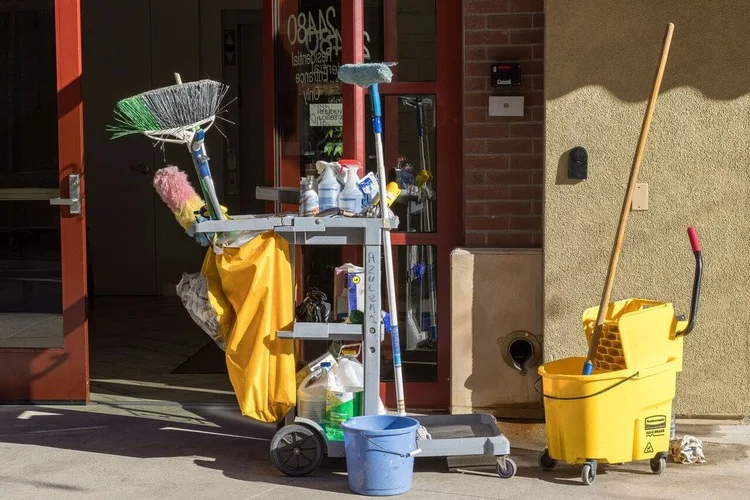
A day porter is a maintenance professional stationed at your property during business hours, handling cleaning, restocking, and small repairs as they come up rather than after everyone goes home. Night janitorial crews reset a building once. A day porter keeps it presentable through the whole day, which matters most in properties where tenants and customers are on site continuously.
Most property managers we talk to in Tucson have heard the term and are not sure whether it describes something they need or something they are already paying for under a different name. The confusion is reasonable. Day portering overlaps with janitorial, with handyman work, and with general building maintenance, and vendors use the words loosely.
This covers what the role actually includes, how it differs from the services it gets confused with, what drives the cost, and the specific factors that change the job in the Sonoran Desert.
What does a day porter actually do?
A day porter handles the tasks that cannot wait until the building closes. The work is reactive and routine at the same time: scheduled rounds through common areas, plus immediate response when something goes wrong.
Typical duties across commercial properties:
- Restroom checks and restocking on a set interval through the day
- Spill response and spot cleaning, particularly slip hazards in lobbies and entryways
- Common area upkeep: vacuuming high-traffic carpet, glass and door cleaning, straightening furniture
- Trash and recycling collection from common areas as receptacles fill
- Entryway and sidewalk policing, including litter pickup and debris removal
- Light maintenance: replacing bulbs, tightening fixtures, clearing drains
- Reporting issues to property management before tenants complain
- Event and meeting room setup and breakdown where the property hosts them
The reporting function is the one that gets undersold. A porter walking the same property every day notices a failing light ballast, a slow leak, or a cracked paver weeks before it becomes a work order or a liability claim. That is a different kind of value than cleaning, and it is the reason facility managers who have used a porter program rarely give it up.
How often does a day porter check restrooms?
Industry practice runs every one to two hours in buildings with steady traffic, more often in retail and medical settings, less in low-occupancy office. The right interval depends on peak patterns rather than a fixed rule. A shopping center with a lunch rush needs a different schedule than a professional office building where traffic arrives at 8am and stays put.
Day porter vs janitorial vs handyman: which do you need?
These three get quoted against each other constantly, and they solve different problems. The distinction is timing and scope, not skill level.
| Service | When it happens | Primary scope | Best fit |
|---|---|---|---|
| Day porter | During business hours, on site | Common area upkeep, rapid response, light maintenance, issue reporting | Multi-tenant retail, offices with visitor traffic, properties where appearance is continuous |
| Janitorial | After hours, scheduled | Deep cleaning, floor care, restroom sanitation, trash removal | Every commercial property. This is the baseline, not an alternative |
| Handyman / building maintenance | On call or scheduled visits | Repairs, HVAC, plumbing, electrical, carpentry | Properties with recurring repair needs beyond a porter’s scope |
A day porter does not replace a janitorial contract. The two are designed to work together, and a vendor who tells you a porter can absorb your nightly cleaning is quoting something other than day portering.
The clearer trade-off is between a day porter and increased handyman visits. If your issue log is mostly appearance and small fixes, a porter is cheaper and faster because the person is already there. If it is genuine repair work, you need a maintenance contractor.
How much do day porter services cost?
Day portering is priced on labor hours, not per task, which makes it one of the more predictable line items in a property budget. The variables are hours per day, days per week, and whether the position is dedicated to your property or shared across a route.
Three structures are common:
- Full-time dedicated. One porter on site eight hours a day, five days a week. Highest cost, and the only option that gives continuous coverage.
- Part-time dedicated. Four to six hours daily, usually scheduled around peak traffic. This covers the majority of multi-tenant retail properties.
- Route-based. A porter covers several properties, spending a set block at each. Lowest cost, and appropriate where the need is scheduled rounds rather than on-call response.
Ask any vendor two questions before comparing quotes. First, is the porter dedicated or on a route, because a route position cannot respond to a spill in ten minutes. Second, what supplies and equipment are included, since some quotes exclude consumables and that gap can be significant across a year of restroom restocking.
What makes day portering different in Tucson?
Most guidance on this topic is written for climates that have nothing in common with southern Arizona. The desert changes both the workload and the schedule.
Dust is a continuous load, not a seasonal one
Fine desert dust tracks into entryways year round and settles on every horizontal surface in a common area. On properties with glass storefronts it shows on doors within hours. A porter’s glass and entryway routine in Tucson runs more frequently than the same routine in a humid climate, and matting programs at entrances do more work here than they do elsewhere.
Monsoon season compresses response time
Between June and September, storms arrive fast and leave standing water, blown debris, and mud tracked across entries. The National Weather Service defines the Southwest monsoon season as running June 15 through September 30. During those months a porter is the difference between a slip hazard sitting in a lobby for four hours and someone squeegeeing it within minutes. Properties that run porters only in the cooler months tend to reverse that decision after one storm season.
Summer heat moves the schedule
Outdoor common areas in a Tucson retail center cannot be worked at 2pm in July. Porter schedules here often front-load exterior tasks into early morning, then shift indoors through the afternoon. That is a scheduling constraint worth raising with a vendor, because a contract written for a mild climate will assume flexibility that does not exist between June and September.
Which properties get the most from a day porter?
The value scales with how many people move through the property during the day and how much the appearance of common areas affects the business operating there.
- Multi-tenant retail centers. The strongest case. Shared entrances, parking areas, and restrooms degrade fast, and tenants notice immediately because it affects their customers.
- Office buildings with visitor traffic. Lobbies, elevators, and conference areas need to hold up through the day rather than just at 8am.
- Industrial and warehouse properties. Less about appearance, more about safety: debris in traffic lanes, spill response, dock area upkeep.
- Medical and professional offices. Restroom standards are higher and the interval between checks needs to be shorter.
A single-tenant building with light foot traffic and no public-facing space usually does not need one. Nightly janitorial plus on-call maintenance covers it, and adding a porter buys coverage the property does not use.
How does day portering fit with other property maintenance?
This is the part most guides skip, and it is where the cost math usually changes.
Common area maintenance on a commercial property is rarely one service. A multi-tenant center needs parking lot sweeping, periodic pressure washing of walkways and dumpster areas, landscape maintenance, graffiti removal, and interior janitorial, alongside daytime coverage. Managed separately, that is five or six vendors, five or six invoices, and five or six people to call when something is missed.
A porter already walking the property every day is the natural reporting point for all of it. They see the graffiti the morning it appears, notice when the sweeping contractor skipped a section, and flag irrigation leaks before the landscape shows stress. When those services sit with one provider, the porter becomes the coordination layer rather than one more vendor to manage.
That consolidation is worth pricing out even if you keep the services separate. The question to ask is how much of your own staff time currently goes to chasing vendors, because that cost does not appear on any invoice.
What to ask before signing a day porter contract
Five questions that surface the differences between quotes that otherwise look identical:
- Is the porter dedicated to this property or covering a route?
- What are the scheduled rounds, and what response time applies to unscheduled issues?
- Are consumables and equipment included, or billed separately?
- Who covers absences, and how quickly?
- What does the porter report on, and in what format does management receive it?
The last one separates a cleaning service from a property maintenance partner. A porter who submits a daily log of what was handled and what needs attention is providing information the property manager would otherwise have to gather themselves.
Frequently asked questions
Is a day porter the same as a janitor?
No. Janitorial work is scheduled deep cleaning, usually after hours. A day porter works during business hours handling upkeep and response. Most commercial properties need both, and the porter supplements the janitorial contract rather than replacing it.
Do day porters do repairs?
Light maintenance, yes: bulb replacement, minor fixture work, clearing slow drains. Anything involving HVAC, plumbing, or electrical systems goes to a licensed maintenance contractor. A porter’s value in that chain is spotting the problem early and reporting it.
How many hours a day does a day porter work?
Four to eight hours is the usual range. Retail centers commonly run a part-time schedule covering peak traffic, while larger office and medical properties run full days. The schedule should match when the property is busiest, not a default eight-hour block.
Can a day porter cover more than one property?
Yes, on a route basis, and it is the most economical structure where the need is scheduled rounds rather than immediate response. The trade-off is response time. If a spill in your lobby needs handling within minutes, a route porter cannot guarantee that.
Do day porters work weekends?
Where the property operates on weekends, yes. Retail centers with Saturday traffic often run porter coverage six or seven days. Office properties typically run weekdays only.
Getting started
If your common areas look acceptable at opening and tired by mid-afternoon, that gap is what day portering solves. The properties that benefit most are the ones where tenants are already reporting appearance issues that a nightly crew cannot address because the problem happens at 11am.
CAMCO provides day portering services in Tucson for multi-tenant retail, office, and industrial properties, alongside the parking lot sweeping, pressure washing, landscape maintenance, and building maintenance those properties need. We work commercial properties only. If you manage a property in the Tucson area and want to talk through whether a porter program fits, we will walk the site with you and put a scope together.